Buy Custom Etched Granite Garden Monuments
Table of Contents
What Makes Genuine Granite Garden Monuments Different
Granite vs. Cultured Stone and Granite-Look Alternatives
Why Material Quality Matters for Outdoor Durability
Custom Design and Personalization: Beyond Cookie-Cutter Memorials
Including Your Photos and Artwork
The Proof Process and Design Approval
Custom Granite Markers for Pets: Honoring Your Companion
Personalized Pet Memorial Stones: Design and Durability
Granite Monument Installation: Site Preparation and Placement
Preparing Your Garden Site
Base Requirements and Professional Installation
Engraving Methods and Long-Term Permanence
Sandblasting (Deep-Carved Lettering and Shapes)
Laser Etching (Photographic Detail and Fine Artwork)
Hand-Chiseling and Hand-Lettering
Comparing the Methods
What Affects Longevity Outdoors
Direct Access, Real Reviews, and Personal Service
Speaking With a Representative
What to Look for in Memorial Company Reviews
Frequently Asked Questions
Last Updated: October 19, 2026
What Makes Genuine Granite Garden Monuments Different
When you're choosing a memorial, the material matters as much as the sentiment. Genuine granite garden monuments offer what mass-produced alternatives cannot: permanence, natural beauty, and decades of weather resistance without fading or cracking.
At Memorials Direct, we work exclusively with authentic granite. Real granite is quarried from the earth, each piece unique in color and grain.
Granite vs. Cultured Stone and Granite-Look Alternatives
The market is full of shortcuts. Cultured stone, composite materials, and granite-look products cost less upfront because they're manufactured in a factory, not extracted from nature.
Cultured stone absorbs water; in freeze-thaw cycles that water expands and contracts, causing cracks and spalling.
Real granite doesn't have these problems. Formed underground for millions of years under intense pressure, it's virtually indestructible.
Why Material Quality Matters for Outdoor Durability
A memorial sits outside, exposed to rain, snow, sun, and temperature swings. It needs to survive generations.

Genuine granite has a density and hardness inferior materials cannot match.
Custom Design and Personalization: Beyond Cookie-Cutter Memorials
The difference between a generic memorial and a truly personal one is the difference between a placeholder and a tribute. When you're memorializing someone important, you deserve more than a template with their name plugged in.
Custom design starts with what matters to you: what they loved, what made them laugh, what their legacy was. We translate those answers into a monument that tells their story in stone.
Including Your Photos and Artwork
One of the most powerful elements of a memorial is a photograph or artwork that captures the person's essence.
Artwork works the same way. A sketch, a drawing, or any image that represents your loved one can be incorporated, a musician's favorite instrument, a gardener's rose, a child's drawing. These touches transform a stone marker into a genuine reflection of the person being remembered.
The Proof Process and Design Approval
We don't just take your order and start engraving. We create a detailed proof showing the layout, text, images, and all design elements.
Mistakes in stone are permanent. We make sure everything is exactly right, spelling of names and dates, image placement, font size and style, overall balance, so you're in control of every detail.
Custom Granite Markers for Pets: Honoring Your Companion
Pets aren't "just animals." They're family. They greet you at the door, comfort you when you're sad, and create memories that last a lifetime.
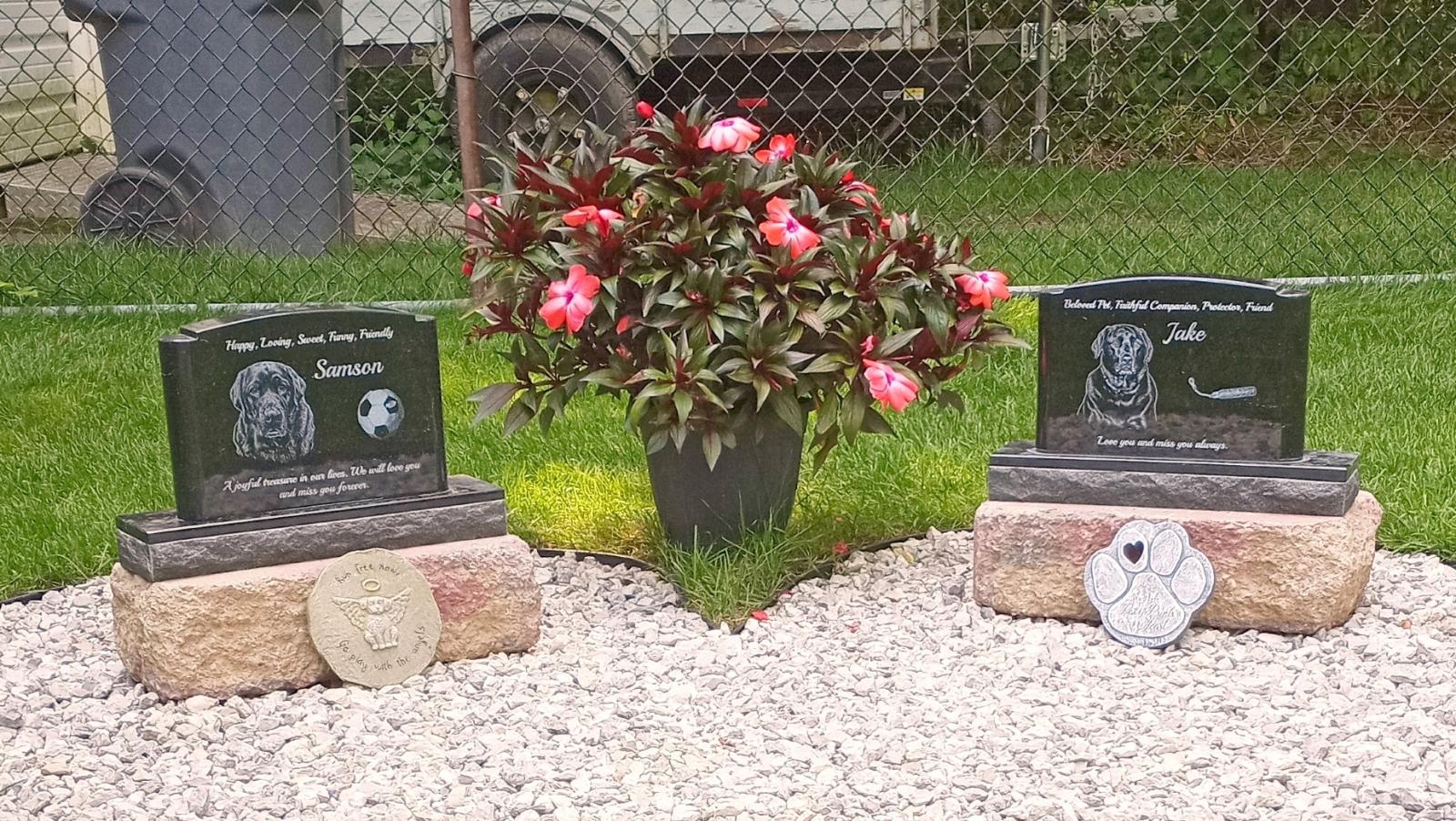
Custom granite markers for pets work the same way as memorials for people. We create a permanent stone tribute that captures your pet's personality and the bond you shared, whether your companion was a dog, cat, horse, or bird.
Personalized Pet Memorial Stones: Design and Durability
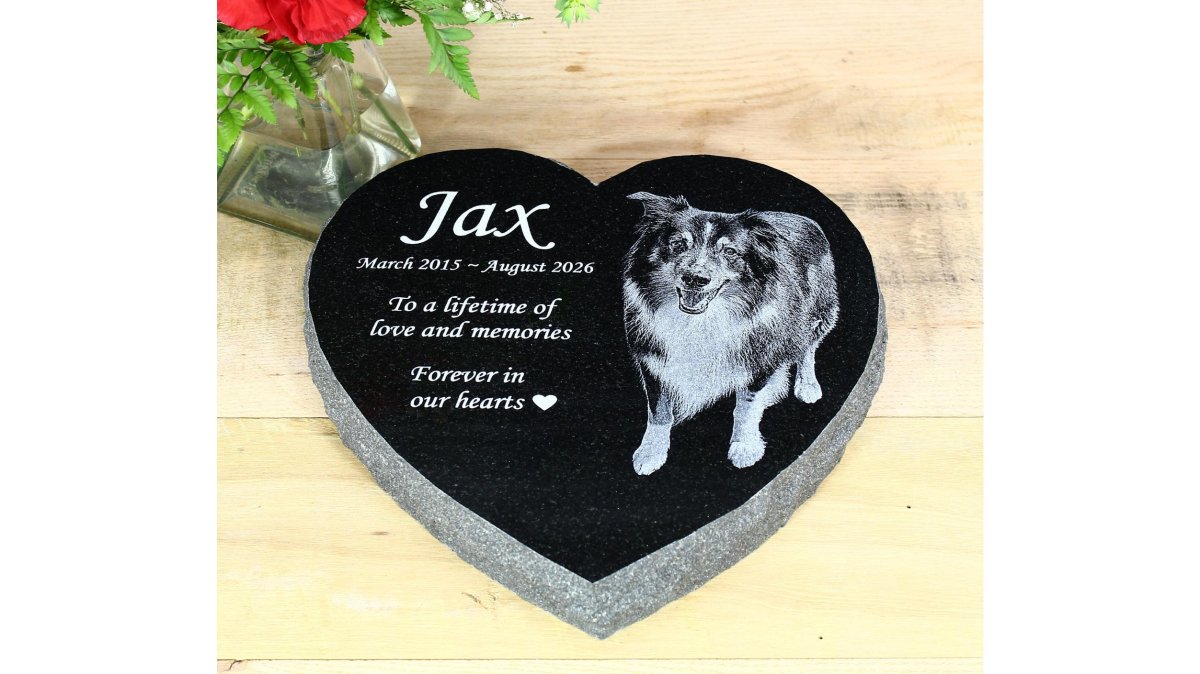
A personalized pet memorial stone tells your pet's story: their name, birth and passing dates, a favorite photograph, and a message that captures what they meant to you, "Our faithful friend," "Forever in our hearts," whatever words feel right.
The durability is the same as any granite monument.
We've worked with families who wanted to memorialize their dog in the garden where they played, their cat by a favorite window, or their horse in a field where they rode.
Granite Monument Installation: Site Preparation and Placement
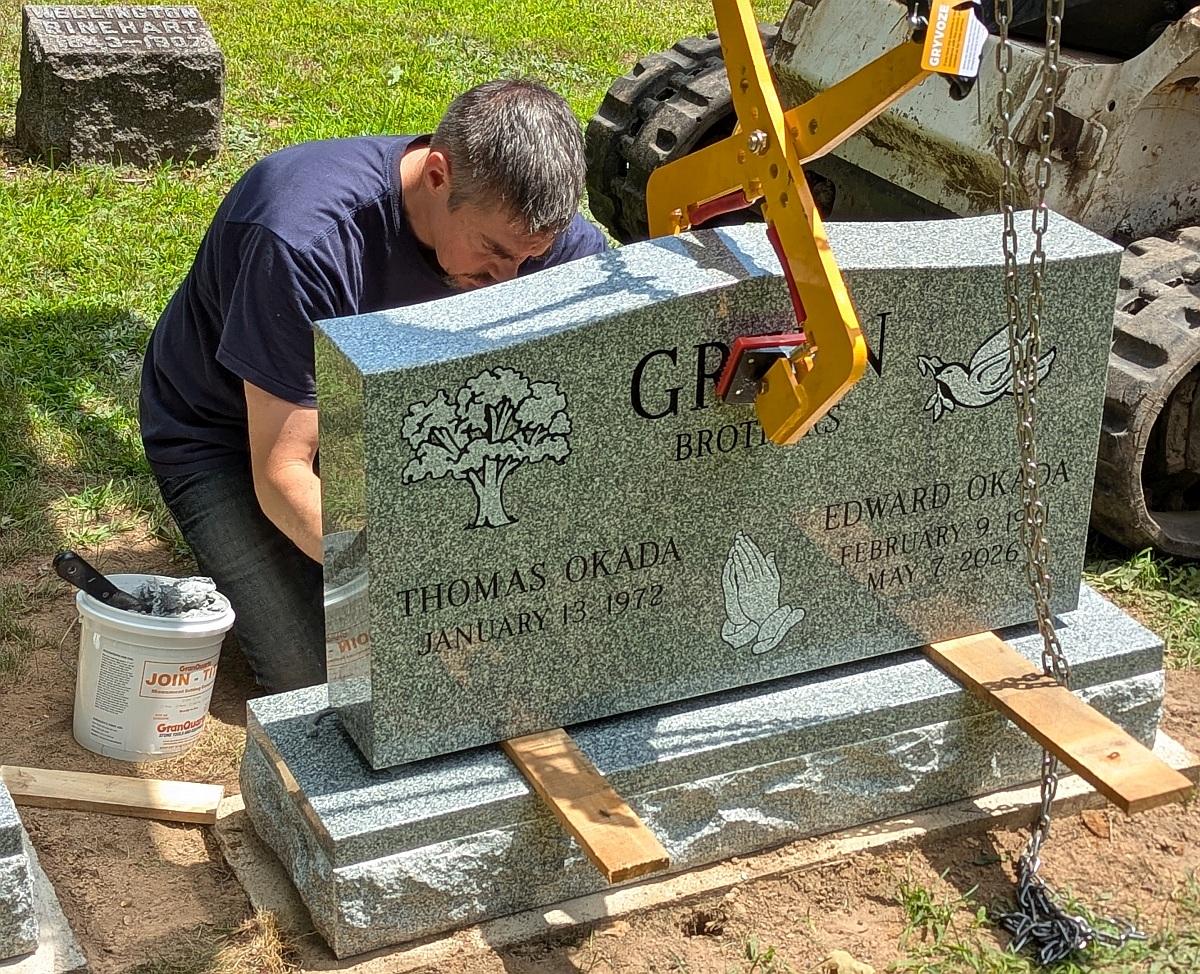
A monument is only as good as its installation. A beautiful stone set on unstable ground will shift, crack, or tip over. Professional installation ensures your memorial stands secure and level for generations, and base and site prep are where garden monuments most often fail.
Preparing Your Garden Site
Before installation, the ground needs proper preparation. A common sequence:
Mark the footprint. Outline the base area with landscaping paint or stakes, allowing a few inches of clearance on every side for the concrete base and cleaning access.
Remove sod and topsoil. Strip the grass and organic layer down to stable subsoil. Organic material under a base decomposes and settles, a leading cause of tilting.
Excavate for the base. Dig a rectangular hole sized to the base plus a margin, deep enough to reach below the local frost line. Your installer or local building department can confirm frost depth.
Compact the subgrade. Tamp the bottom of the excavation so the soil is firm and level; loose fill settles unevenly under the weight of stone and concrete.
Add drainage. A layer of compacted gravel under the concrete helps water move away from the base rather than pooling beneath it, reducing freeze-thaw damage and staining.
If the monument goes into a garden bed rather than a lawn, keep mulch and irrigation heads away from the stone face, constant moisture encourages biological growth, and sprinkler spray can leave mineral deposits.
Base Requirements and Professional Installation
Most granite garden monuments require a concrete base, and the base carries the load. Key considerations:
Base size and thickness. The concrete base should be wider and deeper than the granite so weight is distributed over a larger area; a base that's too small concentrates load and invites settling. Your monument supplier should specify minimum base dimensions for the stone you order.
Reinforcement. Many installers reinforce the concrete with wire mesh or rebar, especially for larger monuments, to resist cracking.
Level set. The granite must sit level and fully bedded on the concrete, not propped on high spots. Voids under the stone trap water and create stress points.
Watch Out Do not set a granite monument directly on soil, mulch, or pavers. Without a proper concrete base below frost depth, the stone will likely shift, tilt, or crack within a few seasons, and correcting it later means lifting the stone, which risks damage.
Installation should be done by someone with experience. The monument needs to be set level, secured properly, and positioned exactly where you want it to remain; poor installation can lead to tipping, cracking, or water damage underneath the stone. Memorials Direct can guide you through the process.
Engraving Methods and Long-Term Permanence
How the engraving is done determines how long it stays clear and readable, and what kinds of designs are possible. There's no single "best" method; the right choice depends on whether you want deep carved lettering, a photographic portrait, or both.
Sandblasting (Deep-Carved Lettering and Shapes)
Sandblasting uses a pressurized stream of abrasive grit to carve into the granite, typically through a rubber stencil that masks off everything that should stay raised. The result is deeply recessed lettering and shapes with crisp, shadowed edges that read well from a distance and resist filling with dirt. It's the traditional method for names, dates, and carved motifs.
Laser Etching (Photographic Detail and Fine Artwork)
Laser etching uses a focused beam to fracture and darken the top layer of the granite, producing the fine detail that makes photographic portraits, detailed landscapes, and intricate artwork possible on stone. The etch is shallower than sandblasting, so it depends on well-polished granite and skilled file preparation. Polished black granite gives striking contrast; lighter or textured stones give less.
Hand-Chiseling and Hand-Lettering
Hand-chiseling and hand-lettering are traditional crafts in which a skilled carver cuts letters and ornament directly into the stone, producing a warmth and individuality machine methods can approximate but not fully replicate. Hand work is slower and typically reserved for smaller inscriptions, accents, or restoration.
Comparing the Methods
Method | Best for | Depth | Detail level | Outdoor longevity notes |
Sandblasting | Names, dates, carved motifs, large lettering | Deep | Moderate to high | Deep carve resists dirt and weathering well |
Laser etching | Photographs, fine artwork, detailed scenes | Shallow | Very high | Requires polished stone and sealing to protect fine detail |
Hand-chiseling | Custom lettering, accents, restoration | Varies | Moderate | Depends on carver skill and depth of cut |
A common pattern is to combine methods: sandblast the name and dates for depth and legibility, then laser-etch a portrait or scene alongside. This gives you both the permanence of deep carving and the detail of a photograph.
Pro Tip Ask to see samples of each method on the same granite color you are considering. Contrast and detail look very different on polished black versus a lighter, speckled granite, and the proof should reflect the actual stone you will receive.
What Affects Longevity Outdoors
Regardless of method, a few factors drive how the engraving holds up:
Stone finish. Polished surfaces show the sharpest contrast for laser etching; honed or rough surfaces suit deep sandblasted carving.
Cleaning. Gentle washing with water and a soft brush, no harsh acids or abrasive pads, keeps lettering and artwork legible.
Placement. Keeping the stone out of constant sprinkler spray and heavy leaf litter reduces staining and growth.
The permanence of your memorial matters. You want your loved one's name, dates, and message readable fifty years from now. The right combination of method, stone, and care gets you there, and we'll walk you through which method suits your design.
Direct Access, Real Reviews, and Personal Service
When you're making decisions about something this important, you need to talk to a real person who understands what you're going through, someone who can answer your questions and guide you with care and expertise.
Speaking With a Representative
We believe in direct access. When you work with Memorials Direct, you're not navigating a phone tree or sending emails into the void.
This matters especially when you're grieving. You shouldn't have to figure out technical details alone or guess about what's possible. A representative can walk you through the design process, explain your options, and help you make decisions that feel right.
What to Look for in Memorial Company Reviews
When you're choosing where to order a memorial, reviews tell you what it's actually like to work with that company. Look for specifics: Was the company responsive?
The testimonials from families we've worked with reflect what matters most: quality craftsmanship, personal attention, and the confidence that your memorial will be exactly what you hoped for.
Losing someone you love is hard. We work directly with you through the design process, create detailed proofs for your approval, and ensure your memorial is installed properly so it stands as a permanent tribute. The Cremation Association of North America recognizes the growing importance of personalized memorials in the grieving process.
Frequently Asked Questions
How can I tell whether a garden monument is made from genuine granite?
Genuine granite is a natural stone with visible mineral flecks and color variation throughout. Ask the memorial provider whether the stone is solid granite or cultured stone (a manufactured composite). Genuine granite resists staining and weathering far better than alternatives. When you contact a provider, ask directly: Is this 100% natural granite? How do you source your stone? Reputable companies will answer without hesitation and explain the difference between their granite and lower-cost substitutes.
Can I submit my own photo or artwork for a granite memorial?
Many custom granite monument providers, including those offering truly personalized designs, accept customer photos and artwork for etching. The quality of the final memorial depends on the resolution and clarity of your image. When ordering, ask whether your photo will be converted into a proof so you can see exactly how it will look etched into the stone before production begins. This approval step ensures your artwork translates well to the engraving method being used.
Will I receive a design proof before my granite monument is etched?
Providers offering genuine custom work typically provide a proof before etching begins. This proof shows your name, dates, artwork, and any messages exactly as they will appear on the finished monument. Requesting a proof protects you from errors and ensures the design meets your expectations. Ask whether revisions are included and how long the proof review process takes. A company that stands behind its work will prioritize getting your approval in writing before any permanent etching occurs.
How do I prepare a garden site for a granite monument, and what base does it need?
Most granite garden monuments require a level, stable foundation to prevent shifting or tipping. A concrete base, gravel pad, or stone foundation is typically recommended depending on soil conditions and climate. Before installation, clear the area of grass or debris and ensure proper drainage to prevent water pooling around the base. When you order, ask your provider whether they offer installation guidance or can recommend a local installer familiar with your area's soil and weather conditions.
Contact Us
Comments