High Quality Granite Grave Markers: A Complete Guide
Table of Contents
What Makes a High Quality Granite Grave Marker
Granite Grave Marker Designs and Style Options
Flat, Upright, Slant, and Bevel Styles
Granite Colors and Stone Finishes
Custom Granite Headstones: Personalization Options
Granite Headstone Engraving and Inscription Methods
How Engraving Methods Compare Over Time
Lettering Styles and Legibility
What to Ask Before You Approve a Design
Granite Memorial Maintenance and Long-Term Care
Cemetery Rules, Dimensions, and Installation
A Practical Checklist for Cemetery Approval
Dimensions and Foundation Basics
Timeline and What to Expect
Why Choose a Direct-to-Consumer Memorial
Conclusion
Frequently Asked Questions
Last Updated: October 14, 2026
What Makes a High Quality Granite Grave Marker
High-quality granite grave markers go far beyond appearance, they weather storms, temperature swings, and decades of exposure without cracking, staining, or fading the way cheaper alternatives do.

The difference comes down to three things: the stone, the craftsmanship, and the permanence of the engraving.
At Memorials Direct, we focus on these fundamentals because a memorial isn't just a purchase, it's a lasting tribute: stone selected for durability, combined with permanent laser etching that won't fade or wear away.
Granite Grave Marker Designs and Style Options
The style of your granite grave marker sets the tone for how the memorial feels and functions in a cemetery. Understanding your options helps you choose something that fits your loved one and the space.
Flat, Upright, Slant, and Bevel Styles
Flat markers lie flush with the ground, subtle, easy to maintain, and preferred by many cemeteries because mowing equipment passes over them.
Upright monuments stand vertically, often 24 to 48 inches tall, and are visible from across the grounds.
Slant markers angle backward at roughly 45 degrees, more visible than flat markers, less imposing than uprights, and easier to read while standing.
Bevel markers have a gentler slope than slant styles, offering a refined look that suits cemeteries with specific aesthetic guidelines.
Granite Colors and Stone Finishes
Black granite is the most popular choice for grave markers, elegant, timeless, and showing inscriptions clearly through contrast with lighter lettering.
Grey granite offers a softer, understated, contemporary look that works well in cemeteries with mixed stone types.
Red granite contains feldspar minerals that give it warmth.
Stone finish affects appearance and maintenance. Polished finishes are glossy and reflective, making inscriptions stand out sharply. Honed finishes are matte, hiding fingerprints and dust better.
Key Takeaway Choose a polished finish if you want maximum visual impact and plan to maintain the marker regularly. Choose a honed finish if you prefer lower maintenance and a more understated appearance.
Custom Granite Headstones: Personalization Options
Personalization transforms a granite headstone from a beautiful object into a deeply personal tribute that reflects the person or pet you're honoring.
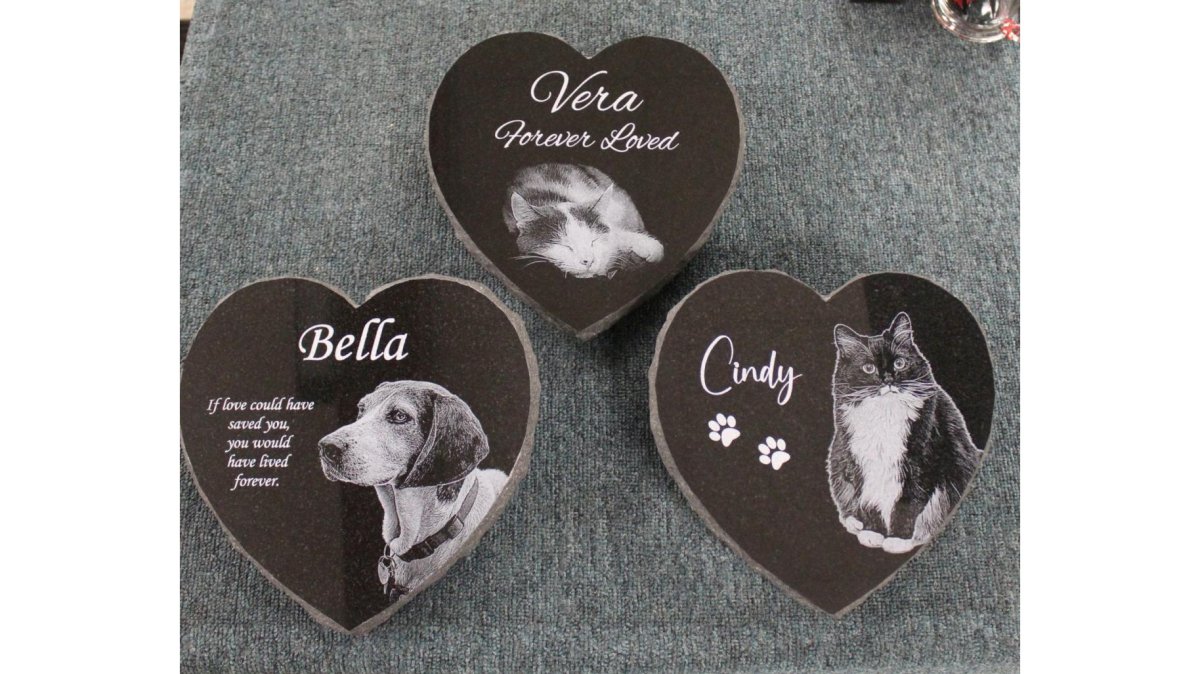
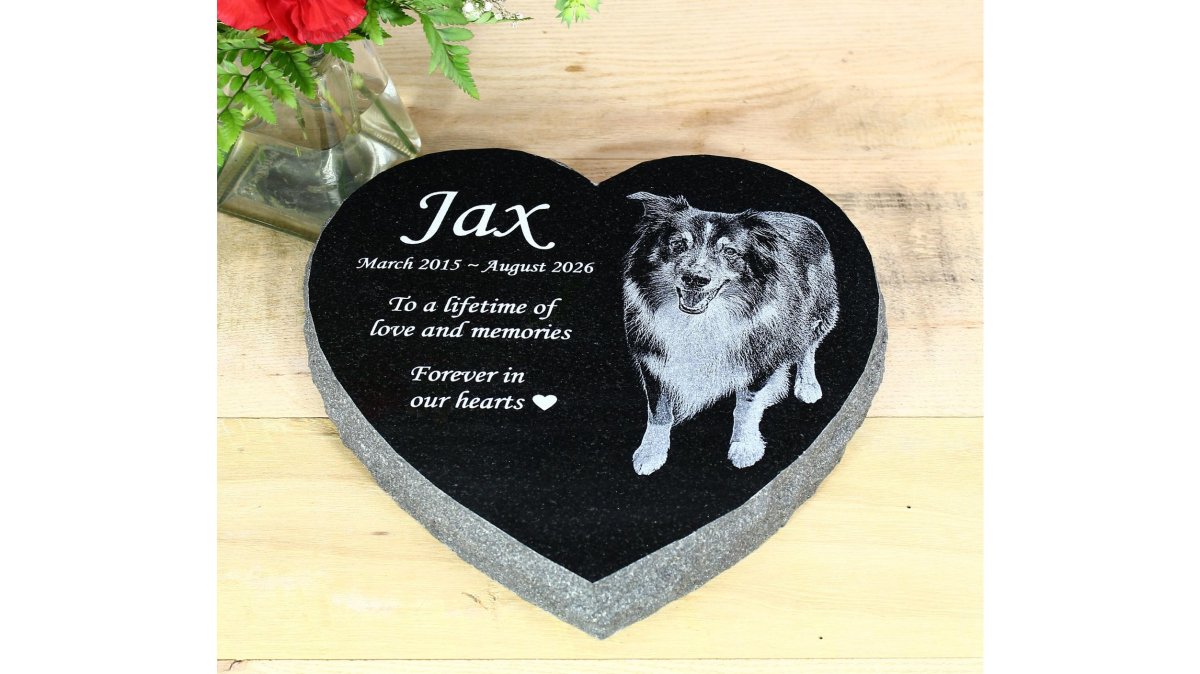
Custom options include photographs, symbols, or scenes that mattered to your loved one.
Many people add symbols or emblems representing faith, profession, or personal values, military insignia, religious symbols, fraternal logos, or hobby imagery all work beautifully in granite.
With Memorials Direct, personalization starts with a conversation about what matters most. We'll explore design possibilities, show you how layouts and images will look on your specific stone, and ensure the final design captures exactly what you want, your memorial, not a generic template.
Granite Headstone Engraving and Inscription Methods
The way text and images are applied to granite grave markers determines how long they stay legible.
Laser engraving is the modern standard for durability. A laser vaporizes the granite surface to a precise depth, so the image or text becomes part of the stone itself.
Hand-carved engraving is traditional and beautiful but requires ongoing maintenance, letters can fill with dirt or moss and wear as weather and foot traffic take their toll.
How Engraving Methods Compare Over Time
What matters most is how lettering holds up after years of sun, rain, and freeze-thaw cycles. Here's how the common approaches compare:
Sandblasting with a contrasting fill. A rubber stencil is applied to the stone, and abrasive material is blasted through it to carve the letters. The recessed letters are then filled with a contrasting material so they read clearly against the granite. This is the most common method for traditional cemetery lettering. The carve itself is permanent, but the contrast fill is the part that ages, it can dull, chalk, or wear thin over decades, and some cemeteries and monument companies will refresh it.
Laser etching. A laser removes a thin layer of the polished surface to create the design. On polished black granite this produces a white-to-gray image with fine detail, which is why it's the preferred method for photographs, portraits, and intricate scenes. Because the image is cut into the stone rather than applied on top, it doesn't peel or flake. The trade-off is that laser etching works best on dark, polished stone, on lighter or unpolished granite the contrast is much weaker.
Hand-carved or hand-lettered work. A skilled carver cuts the letters by hand, often with a chisel and mallet. The result is one-of-a-kind and can be deeply dimensional. The trade-off is cost, lead time, and legibility: deep carved letters can collect dirt and moss, and fine detail is limited compared to laser work.
Lettering Styles and Legibility
Lettering style affects how readable the inscription stays over time, especially at a distance or in low light:
Serif and script styles are traditional and elegant, but thin strokes and fine flourishes can blur or fill in as the stone weathers.
Sans-serif and block styles hold their edges better and stay readable at a distance, which is why they're common on flat markers viewed from above.
Letter size matters more than most people expect. Small, tightly spaced lettering is harder to read and harder to clean. A little extra size and spacing usually pays off in long-term legibility.
What to Ask Before You Approve a Design
Before you sign off on an inscription, confirm a few practical details:
What engraving method will be used?
Can you see a proof or layout of the exact lettering, spacing, and size before production?
How will the lettering read on the granite color and finish you've chosen, polished, honed, or textured?
Watch Out Avoid memorials with painted or filled lettering that isn't cut into the stone. Paint fades, flakes, and requires periodic repainting. A granite grave marker should be permanent, choose laser engraving, not surface-applied letters.
Key Takeaway The most legible, lowest-maintenance inscriptions combine a cut-into-the-stone method (laser) with strong contrast between the lettering and the granite. Confirm the method, the contrast treatment, and the letter size before production begins.
Granite Memorial Maintenance and Long-Term Care
Granite is remarkably durable, but basic maintenance keeps it looking its best for decades.
Routine cleaning is simple: mild soap and water with a soft brush or cloth.
Moss and lichen accumulate in damp climates.
Avoid sealing granite memorials. Cemetery-grade granite is dense enough that sealing isn't necessary and can trap moisture.
Winter weather is the biggest test for any grave marker.
Cemetery Rules, Dimensions, and Installation
Before finalizing your design, understand your cemetery's rules. Every cemetery has guidelines about marker size, style, materials, and installation, getting them wrong can mean a rejected design, delayed placement, or an order that has to be remade.
A Practical Checklist for Cemetery Approval
Most cemeteries follow a similar review process. Working through these steps early prevents surprises:
Get the rules in writing. Ask the cemetery office for current monument regulations, not a verbal summary, the version that applies is the one in effect when your marker is installed.
Confirm the plot type and location. Rules differ for a single grave, companion grave, columbarium niche, or memorial garden. Know exactly where the marker will sit before you design it.
Check size limits. Most cemeteries set maximum height, width, thickness, and base size. Typical upright monuments run roughly 24 to 48 inches tall, but limits vary widely by cemetery and section.
Check style and material restrictions. Some cemeteries allow only flat markers; others permit uprights but restrict finishes, colors, or imported stone. Historic sections often have stricter aesthetic rules.
Confirm the foundation requirement. Many cemeteries require a concrete foundation and specify its dimensions and depth, it's what keeps a marker level and stable through freeze-thaw cycles.
Ask who installs. Some cemeteries handle installation; others require a licensed monument installer.
Submit the design for approval. Many cemeteries require a drawing or proof before production. Build approval time into your timeline.
Confirm delivery and access. Ask where the marker can be delivered, what equipment can enter the grounds, and whether seasonal installation restrictions apply.
Dimensions and Foundation Basics
Marker dimensions are usually expressed as height, width, and thickness, with the base sized separately. A few practical points:
Flat markers sit flush or nearly flush with the ground, often on a concrete foundation so they stay level.
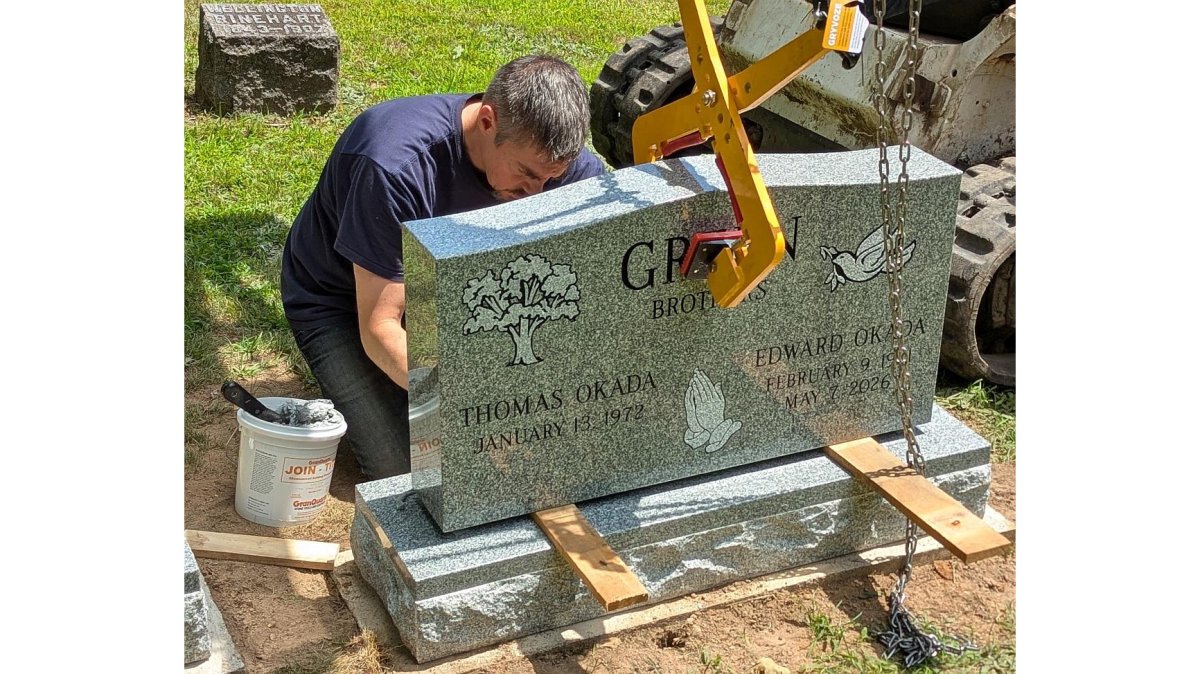
Upright monuments consist of a die (the upright stone) and a wider base for stability.
Slant and bevel markers sit between flat and upright in height and visibility.
The foundation is poured concrete, sized to the marker and set below the frost line where that matters, the difference between a marker that stays level for decades and one that tilts after a few winters.
Timeline and What to Expect
A realistic sequence: confirm cemetery rules, finalize design and inscription, get cemetery approval, allow production time, schedule foundation and installation, then placement. Timelines vary, so ask your memorial provider and the cemetery for current estimates before committing to a date for a service or unveiling.
Pro Tip Ask the cemetery for their monument regulations in writing before you finalize any design. The single most common cause of delay is a design that doesn't match the section's rules, and that's entirely avoidable with one conversation up front.
Memorials Direct helps you navigate these requirements, advising on what's typically allowed, helping you understand your cemetery's rules, and ensuring your design meets those guidelines before production begins.
Why Choose a Direct-to-Consumer Memorial
The traditional path to a grave marker usually goes through a funeral home, which acts as a middleman between you and the actual craftspeople, adding distance to a process that should feel personal and direct.
Memorials Direct works differently. We craft your memorial directly and you work with us one-on-one, no middleman, no loss of communication. When you have questions or want to adjust your design, you're talking directly with the people making it.
This direct approach means faster turnaround, you're not waiting for a funeral home to place an order with a supplier, and your memorial gets the personal attention it deserves. We listen to what matters, show you options, and help you create something that truly honors your loved one.
Best For Families who want direct access to the craftspeople, want to avoid funeral home markups, and value personal service during a difficult time. Also ideal for people planning ahead and wanting to make these decisions on their own timeline, without pressure or middlemen.
Conclusion
Choosing a high quality granite grave marker is about more than stone and an inscription, it's about creating a lasting tribute that endures for generations. Prioritize durable materials, skilled craftsmanship, meaningful personalization, and permanent engraving methods, and you'll honor your loved one exactly as you envision.
At Memorials Direct, we specialize in custom granite memorials with permanent laser etching, personalized design, and direct access to our craftspeople. We handle the complexity so you can focus on what matters. Contact us to discuss your memorial, explore design options, and get started on a tribute that will last.
Frequently Asked Questions
What makes a granite grave marker high quality?
High quality granite grave markers are crafted from solid granite with consistent density and color throughout. Superior markers use durable stone finishes that resist weathering, employ precise engraving techniques that preserve legibility for decades, and feature expert craftsmanship in design and installation. The granite's origin, thickness, and the quality of the finishing process all affect durability and appearance over time. When purchasing, verify that your marker comes with a guarantee and is created by experienced artisans who understand stone properties and cemetery standards.
How long do granite grave markers last?
Granite is one of the most durable materials available for memorials. High quality granite grave markers can last 100+ years or longer when properly maintained and installed. The stone's natural resistance to weathering, combined with quality engraving techniques, ensures that inscriptions remain legible and the monument retains its appearance across generations. Factors affecting longevity include the specific granite type, local climate conditions, proper installation depth, and regular maintenance such as gentle cleaning.
Can I customize a granite grave marker with photos or unique designs?
Yes. Custom granite headstones can incorporate photographs, custom artwork, symbols, and personalized designs through advanced engraving methods. Laser etching allows detailed images and intricate patterns to be permanently set into the stone. Many providers, including direct-to-consumer specialists, work one-on-one with families to create unique designs that reflect a loved one's personality, interests, or heritage. Discuss your vision with your memorial provider to explore what's possible within your cemetery's design guidelines.
What should I do if my granite memorial shows staining or weathering?
Granite memorial maintenance is straightforward. Clean your memorial regularly with mild soap and water, using a soft brush to remove dirt and organic growth. Avoid acidic cleaners or harsh chemicals that can damage the stone finish. Most weathering is cosmetic and does not affect the marker's structural integrity. If you notice actual damage such as cracks or deep erosion, contact your memorial provider.
Contact Us
Comments