Custom Pet Urns for Gardens: 7 Memorials That Last
Last Updated: October 23, 2026
Quick Summary
Custom pet urns for gardens are containers or memorial stones designed to hold a pet's cremated remains while surviving permanent outdoor exposure. The best of them use solid stone, real engraving (not paint or decal), and a stable base, and granite is the most durable choice because it resists moisture, holds deep engraving for decades, and does not fade in ultraviolet light.
Granite absorbs very little water, holds its color, and does not care about frost.
The common rule of thumb is roughly one cubic inch of urn capacity per pound of your pet's healthy weight.
A buried urn with a surface marker is the most stable option in freeze-thaw climates.
Watch how water moves through your yard during heavy rain and avoid the low spot where it pools.
Letting a child help choose the stone, the words, or the photo gives them a role in mourning.
Table of Contents
Choosing Custom Pet Urns for Gardens: What Actually Holds Up
Quick Comparison: Garden Memorial Types at a Glance
Outdoor Pet Urns: Materials That Survive Rain, Sun, and Frost
Granite Pet Memorials: The Case for Genuine Stone
Photo-Etched Pet Memorials: Turning a Favorite Picture Into Stone
Pet Cremation Urns for Burial: Markers, Stones, and What Goes in the Ground
Sizing and Capacity: Matching the Urn to Your Pet
Site Selection, Installation, and Involving Children in the Design
Frequently Asked Questions
Choosing Custom Pet Urns for Gardens: What Actually Holds Up
Most pet urns are built for a shelf, not for weather. That single fact explains why so many memorials that look beautiful on arrival look tired after a year outdoors. At Memorials Direct, we build custom pet urns for gardens from genuine granite because stone is the one material that keeps its face through rain, sun, and frost without fading, warping, or rusting.
Below, we walk through memorial types that hold up outdoors, what each one is actually good for, and how to pick the right size and site. If you are considering a small upright marker for a bed or patio, you can browse our pet garden memorials to see the options.
Custom pet urns for gardens are containers or memorial stones designed to hold a pet's cremated remains while surviving permanent outdoor exposure. The best of them use solid stone, deep engraving, and a stable base.
Quick Comparison: Garden Memorial Types at a Glance
Memorial Type | Holds Ashes | Weather Resistance | Best For |
Granite garden urn | Yes | Excellent | Year-round outdoor display |
Photo-etched granite stone | Optional | Excellent | A favorite photograph in stone |
River rock memorial stone | No | Excellent | A natural look in beds or borders |
Pet garden memorial | No | Excellent | Small upright marker in a garden |
Planter urn | Yes | Good, with drainage care | A living plant above the ashes |
Tree or bio urn | Yes | Varies by product | Planting a tree as a tribute |
Wood or ceramic urn | Yes | Indoor only | Shelves, mantels, niches |
Outdoor Pet Urns: Materials That Survive Rain, Sun, and Frost
Outdoor pet urns fail for predictable reasons: water gets in, sun bleaches the finish, or trapped moisture freezes and cracks the piece. Material choice decides which of those you'll face.
Granite absorbs very little water, holds its color, and does not care about frost.
If you want to see what an outdoor-rated piece looks like before you commit, browse our pet urns collection for indoor and garden placement options.
Granite Pet Memorials: The Case for Genuine Stone
Granite pet memorials are the most durable choice for a garden because granite resists moisture, holds deep engraving for decades, and does not fade in ultraviolet light. Genuine stone is also heavy enough to stay put through storms and settling soil.

Custom Granite Markers for Pets: A 2026 Guide
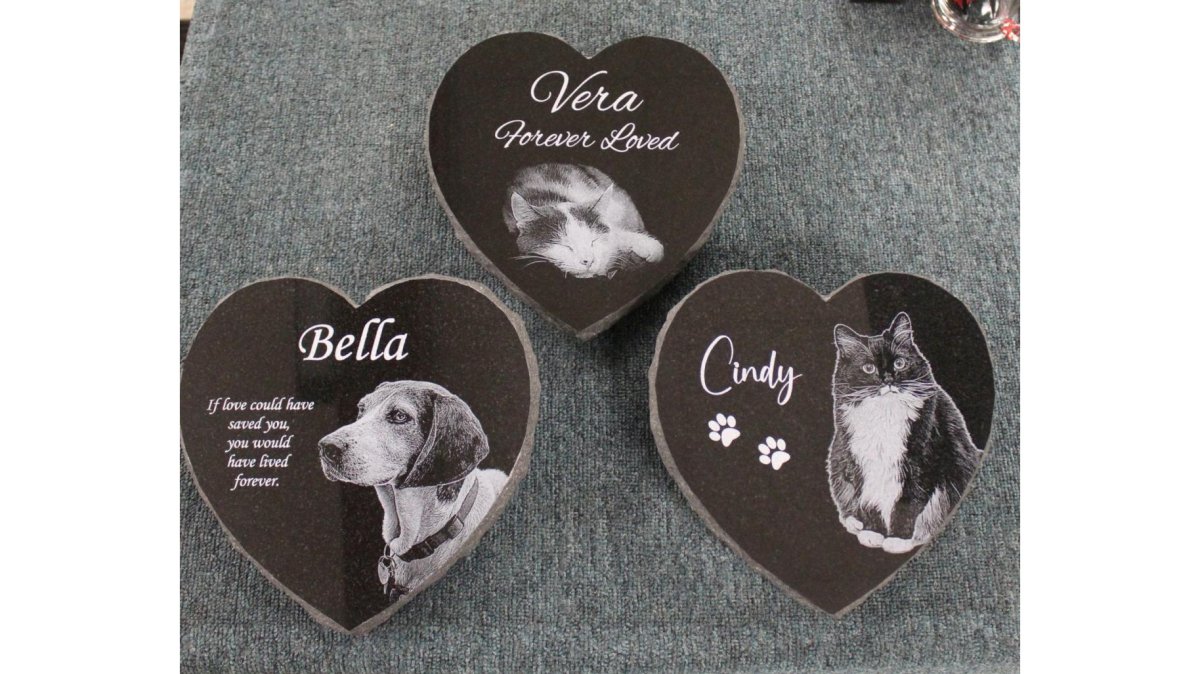
Laser etching on genuine stone goes into the surface rather than sitting on top of it, which is why it survives weather that erases painted lettering.
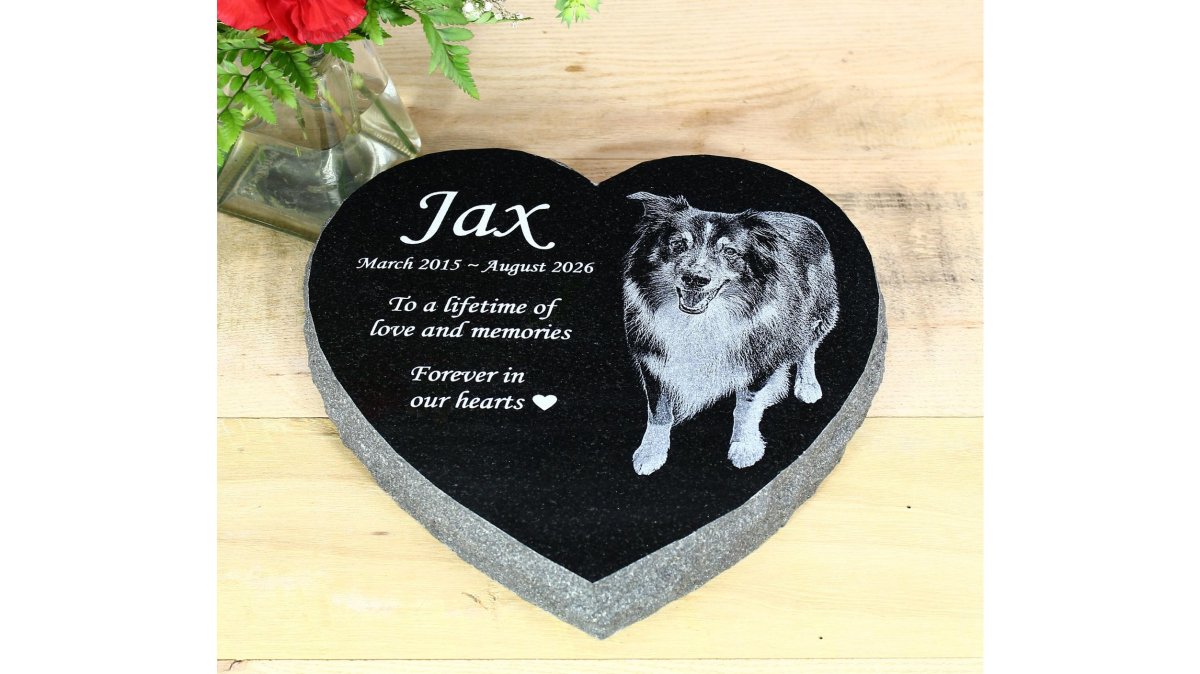
You can see a specific example in our custom engraved black stone garden urn.
Photo-Etched Pet Memorials: Turning a Favorite Picture Into Stone
Photo-etched pet memorials reproduce a photograph permanently into the surface of granite, so the image does not peel, fade, or wash away. The quality of the result depends almost entirely on the photo you supply and the design work behind it.
Choose a sharp, well-lit image where your pet's face fills a good portion of the frame. Phone photos work when the focus is clean. Blurry or distant shots limit what an artist can do.
For guidance on turning a photo and a few words into a balanced design, our article on designing a memorial walks through the choices that matter.
Pro Tip Send two or three photos rather than one. A designer can often pull a clearer expression from a second image.
Pet Cremation Urns for Burial: Markers, Stones, and What Goes in the Ground
Pet cremation urns for burial serve two different purposes, and mixing them up causes problems. Some urns are designed to go into the ground. Others are designed to stay above it and hold ashes for display.
Buried urn with a surface marker. The ash container goes into the ground and a flat granite marker or memorial stone sits above it. Maintenance is low, an occasional rinse and a check that the stone stays level. This is the most stable option in freeze-thaw climates because the marker is supported by compacted soil rather than sitting on a pedestal. It suits families who want the ashes to remain in one fixed place.
Surface garden urn. The urn sits on a patio, in a bed, or beside a bench and holds the ashes above ground. Maintenance is moderate: check the seal and drainage, clear debris from the base, and confirm the piece has not rocked after frost. It suits families who want to visit and touch the memorial without digging.
If the original ash container will be buried, you may not need an urn at all. Many families bury the container and place a marker or memorial stone above it. That approach keeps the ashes in place and gives you a durable surface to visit. If you prefer to keep ashes above ground, a garden urn holds them while sitting on a patio, in a bed, or beside a bench. Decide which of these you want before you shop, because it changes everything about what you buy.
Key Takeaway Choose the memorial type first, then the material. A buried marker and a surface urn solve different problems, and the right granite piece for one is the wrong piece for the other.
Sizing and Capacity: Matching the Urn to Your Pet
Urn capacity is usually described in cubic inches, and the common rule of thumb is roughly one cubic inch per pound of your pet's healthy weight. A dog that weighed 60 pounds generally calls for an urn around 60 cubic inches or larger. That rule is a starting point, not a guarantee, because cremated remains vary with bone density and the cremation process.
Three practical notes for garden placement specifically. First, leave headroom rather than buying exactly to the estimate, a slightly larger cavity costs little and prevents a rushed second purchase. Second, if you plan to place the urn inside a planter or surround it with plants, account for the soil and roots, not just the urn; a planter that is mostly soil leaves little room for a sealed container. Third, confirm whether the stated capacity is the internal cavity or the exterior volume, because the two numbers can differ substantially on thick-walled stone pieces.
Pet Size | Approximate Healthy Weight | Suggested Capacity |
Small cat or small dog | Under 15 lb | 15-20 cubic inches |
Medium dog | 25-50 lb | 30-55 cubic inches |
Large dog | 60-90 lb | 65-95 cubic inches |
Giant breed | Over 100 lb | 100+ cubic inches |
For a garden urn that will stay outdoors year-round, sizing also affects stability. A larger, heavier granite piece resists wind and settling better than a small one, and a wider base distributes weight so the memorial does not rock after frost. If you are splitting ashes among family members, size each urn to its share rather than to the whole pet, and ask how the remains will be divided before you order.
Key Takeaway Buy for the weight your pet was at a healthy baseline, add a small margin, confirm whether capacity means internal cavity or exterior volume, and choose a base wide enough to stay level outdoors.
Site Selection, Installation, and Involving Children in the Design
Site selection comes before design, not after. Watch how water moves through your yard during heavy rain and avoid the low spot where it pools. Look for a place you pass often, because a memorial you never see stops doing its job.
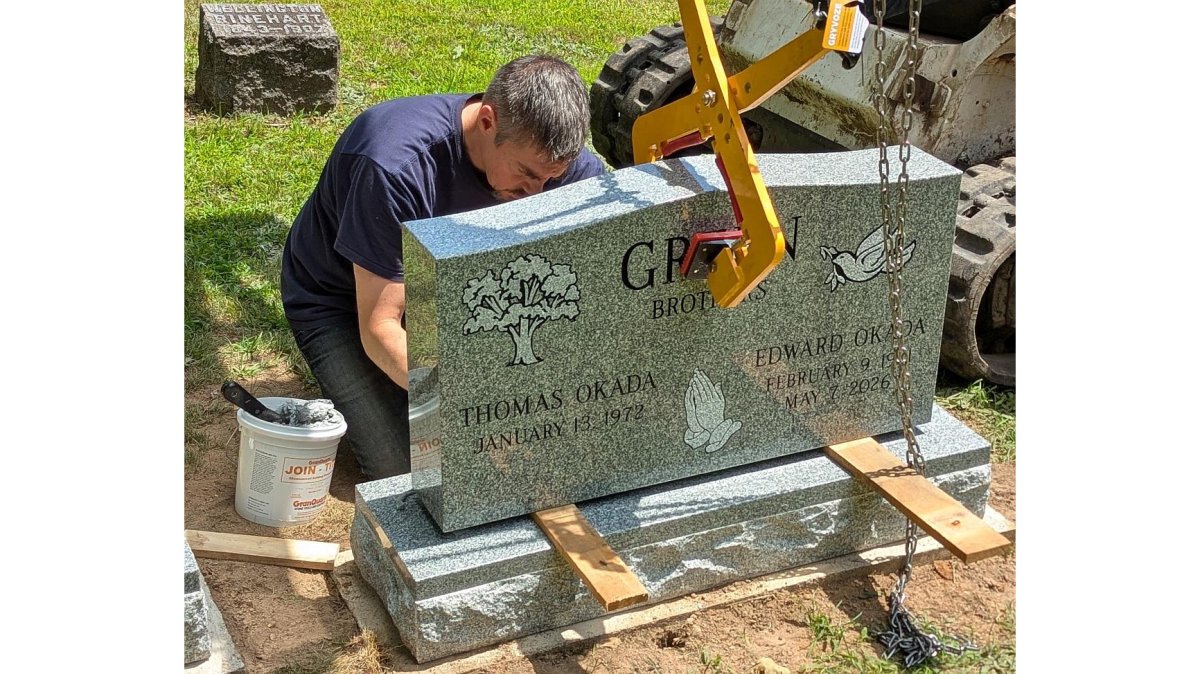
Prepare the ground by clearing the area and leveling a compacted base so the stone sits flat and does not rock. Granite is heavy, so plan the move before the piece arrives. For the full process, see our step-by-step guide to installing heavy granite garden monuments.
Involving children in the selection and design is one of the most useful things you can do. Letting a child help choose the stone, the words, or the photo gives them a role in mourning and teaches them, in plain terms, what loss and remembrance mean. Answer their questions honestly and let the design take as long as it takes.
Pro Tip Ask each child to contribute one word or one small design idea. A memorial that carries something from everyone in the household becomes a shared place rather than a private one.
Frequently Asked Questions
What type of urn is best for a garden?
A sealed granite urn or a granite memorial stone paired with a buried ash container holds up best outdoors. Granite resists moisture, frost, and ultraviolet light, so an etched name or photo stays legible for decades. If you want the ashes above ground, choose a sealed outdoor urn rated for exposure; if the ashes will be buried, a marker or memorial stone over the site is often the more practical choice.
Can you bury a pet's ashes in a garden?
In many cases yes, but check local rules first, since some municipalities regulate burying animal remains on residential property. Choose a spot away from water lines and vegetable beds, and dig a hole deep enough that the container sits below the frost line. If the original ash container will be buried, many families opt for a marker or memorial stone above it so the site is marked and visitable. Keep a record of the location in case you move.
Can a granite pet memorial include a photo?
Yes. Photo-etched pet memorials use laser etching to reproduce a photograph directly into the granite surface. The image is burned into the stone rather than printed on top, so it does not peel or wash away with rain. Send the clearest, highest-resolution photo you have, ideally a close head shot with good lighting. Your designer can preview the etching before production so you can confirm the likeness and layout.
How do you prepare a garden site for a pet urn or memorial stone?
Pick a spot with good drainage and partial shade so plants and stone both hold up. Clear the area, level the ground, and set a compacted base of gravel or sand so the stone does not settle unevenly. If the ashes will be buried, dig the hole first, then place the marker. Allow children to help choose the site and the wording; it gives them a concrete way to process loss and take part in the remembrance.
Should I choose an urn, marker, or memorial stone for my pet?
Choose an urn if you want the ashes kept indoors or in a sealed container you can move. Choose a marker or memorial stone if the ashes will be buried in the garden and you want a permanent, weather-resistant tribute at the site. Many families combine the two: a granite urn for the ashes and an engraved stone or plaque marking the garden spot. Genuine granite is the most durable option for anything staying outdoors year round.
Losing a pet leaves a gap that a garden memorial cannot fill, but it can give you somewhere to stand. If you want a piece that will still look right after years of weather, Memorials Direct designs each memorial one-on-one with you, etches it permanently into genuine granite, and sells directly so you work with the people doing the work. Get started with Memorials Direct and create a lasting tribute built to stay in your garden for generations.
Contact Us
Add memorialsdirect.net as a preferred source on Google →
Comments