Can Cremated Ashes Be Buried Under a Headstone?
Last Updated: October 23, 2026
Quick Summary
Yes, can cremated ashes be buried under a headstone in most cases, but the cemetery sets its own rules on grave depth, containers, and memorial placement. Confirm in writing whether urn burial is permitted in your grave space and what container or vault is required before you order anything.
Burying ashes beneath a marker is an underground interment; placing ashes inside a memorial keeps them above ground.
No single national standard covers cremation burials, so cemetery rules vary widely by state and cemetery type.
Adding ashes to an existing grave usually requires cemetery permission and sometimes a second interment right.
Ordering a headstone before cemetery approval is the most common and most expensive mistake families make.
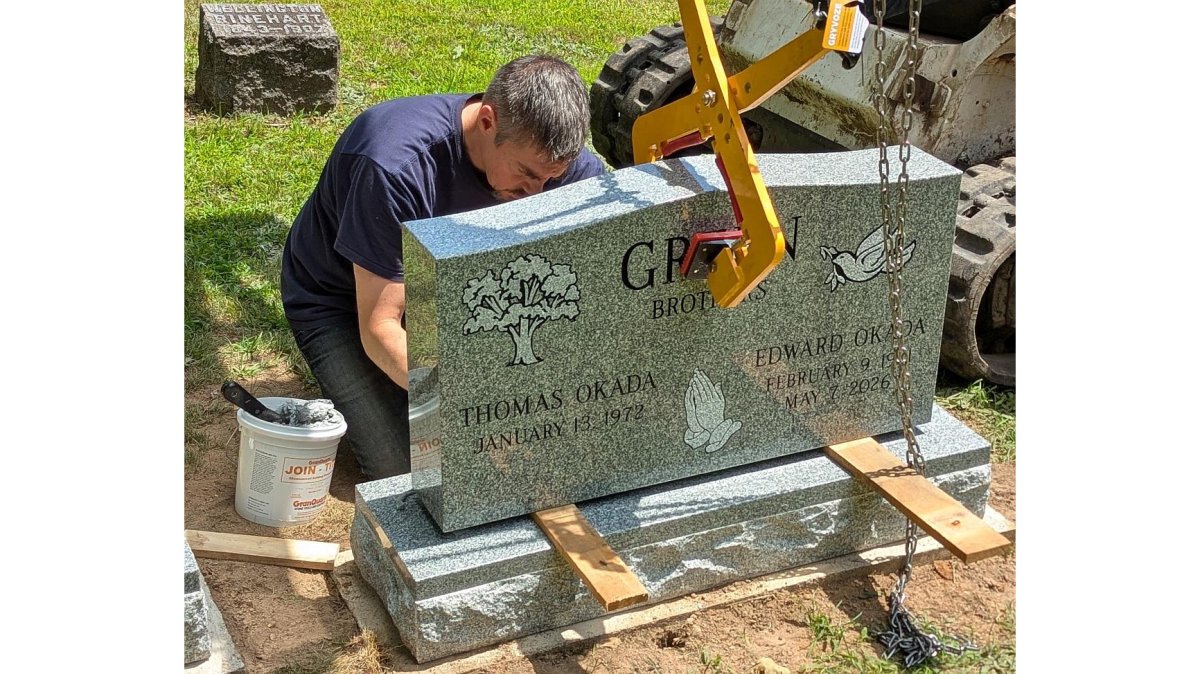
A double urn monument holds two sets of ashes, so plan the inscription layout for both names from the start.
Table of Contents
Can Cremated Ashes Be Buried Under a Headstone?
Burying Ashes Beneath a Marker vs. Placing Them Inside It
Cemetery Rules for Cremation Burials You Need to Know
Step by Step: How to Arrange an Interment
Cremation Headstone Options That Hold or Mark Ashes
When a Headstone Urn for Ashes Makes Sense
Double Urn Monuments for Sharing a Memorial
Inscriptions, Shared Memorials, and What to Ask Before You Order
Frequently Asked Questions
Can Cremated Ashes Be Buried Under a Headstone?
Yes. Whether can cremated ashes be buried under a headstone depends on the cemetery, but in most cases the answer is yes.
The key distinction most guides skip is simple. Burying ashes beneath a headstone means placing the urn in the ground at the grave.
Those are two different arrangements with two different sets of rules. Knowing which one you want before you call the cemetery saves weeks of back and forth.
Below, we walk through cemetery permission, the interment process, and the memorial options that actually hold ashes. First, the distinction that matters most.
Burying Ashes Beneath a Marker vs. Placing Them Inside It
Burying ashes beneath a marker is an underground interment. The urn goes into the grave, and the headstone sits above it as a marker. Placing ashes inside a memorial is different: the granite itself becomes the container, and nothing goes into the ground.
Both approaches memorialize a loved one. They differ in four practical ways:
Permanence: An underground urn stays with the grave. An above-ground urn memorial can sometimes move with the family.
Cemetery approval: Underground burial follows cemetery interment rules. Above-ground urn memorials must meet cemetery memorial rules.
Visitation: A grave you can stand beside feels different from an urn you keep at home.
Capacity: Some urn memorials hold the ashes of more than one person, which matters for couples.
Ask yourself one question first: will this memorial stay in a final resting place, or might you move and want to take it with you? That answer points to the right option.
Pro Tip When you call the cemetery, ask two separate questions: "What are the rules for burying an urn in a grave?" and "What are the rules for an above-ground memorial that holds ashes?" Staff often answer one and assume you meant the other.
The two arrangements differ in four practical ways worth weighing before you call the cemetery.
Factor | Burying ashes beneath a marker | Placing ashes inside a memorial |
Permanence | Underground urn stays with the grave | Above-ground urn memorial can sometimes move with the family |
Cemetery approval | Follows cemetery interment rules | Must meet cemetery memorial rules |
Visitation | A grave you can stand beside | An urn you keep at home |
Capacity | Not described as holding multiple sets | Some urn memorials hold ashes of more than one person |
Cemetery Rules for Cremation Burials You Need to Know
Cemetery rules for cremation burials vary widely, and no single national standard covers them. Some cemeteries allow urn burial in a standard grave space.
The rules usually fall into four buckets. Knowing which bucket a question belongs to helps you ask the right person.
Plot eligibility: whether the grave space you own can receive cremated remains, and whether the cemetery requires a dedicated cremation plot instead.
Container and vault requirements: whether the urn must sit inside a burial container or urn vault, and what materials the cemetery accepts.
Opening and closing procedures: who performs the grave opening and closing, how much notice the cemetery needs, and what fees apply.
Memorial approval: what marker type, size, material, and inscription the cemetery approves for the plot, and who signs off before installation.
Here is what to confirm in writing before you order anything:
Whether the cemetery permits urn burial in a grave space you already own
Whether a burial container or urn vault is required, and what dimensions it must fit
Whether the cemetery allows ashes to be added to an existing grave, and whether that requires a second interment right
What memorial type and size the cemetery approves for the plot
Two practical points deserve extra attention. First, container dimensions matter. Second, existing graves are not automatic.
Costs deserve their own question. Cemeteries commonly charge separate fees for grave opening and closing, and sometimes for a marker permit or vault (Buying a Cemetery Site). For a closer look at how cemetery regulations shape memorial choices, see our guide to navigating cemetery rules for private memorials.
Watch Out Ordering a headstone before the cemetery approves it is the most common and most expensive mistake we see. If the memorial does not meet the cemetery's rules, installation can be refused, and returning a custom-etched piece is rarely possible.
Step by Step: How to Arrange an Interment
Arranging an interment follows a clear sequence, and the order matters. Start with the cemetery, not the memorial.
Kari the Mortician
Confirm burial rights. Check the deed or contact the cemetery to verify the grave space and who holds burial rights. If the grave already holds a casket or another urn, ask whether a second interment is permitted and what it requires.
Ask for the cremation burial provisions in writing. Request the rules for urn burial, container and vault requirements, allowed dimensions, and memorial specifications. Get the fee schedule at the same time so nothing arrives as a surprise later.
Choose between underground burial and an urn memorial. Decide whether the ashes go in the ground or inside the memorial. This choice determines which set of cemetery rules applies.
Select the urn or memorial. Confirm it meets the cemetery's approved requirements before ordering. If a vault is required, confirm the urn fits inside it.
Schedule the interment with cemetery staff. They coordinate the grave opening and closing and will tell you how much notice they need.
Arrange the memorial installation. Confirm whether the cemetery handles installation or requires an approved installer, and whether a marker permit is needed.
Plan the inscription. Finalize names, dates, and any shared memorial wording before the stone is etched.
Two steps trip people up. Step two, because verbal assurances disappear when staff change. And step seven, because etching is permanent. Once the inscription is cut, there is no revision.
A few practical details are worth confirming along the way. Ask whether the urn can be buried with a casket if that situation applies, and whether the cemetery supplies or requires a specific vault.
Pro Tip Build a single folder, paper or digital, for the deed, the cemetery's written rules, the fee schedule, the memorial approval, and the inscription proof. When staff change or an installer asks a question, that folder answers it in minutes.
Cremation Headstone Options That Hold or Mark Ashes
Cremation headstone options fall into two families: memorials that mark a grave and memorials that hold the ashes themselves. Traditional headstones remain popular, but you have more options than you might think.

The main choices include:
Traditional upright headstones placed above an underground urn burial
Flat ground markers set level with the grass, often used where upright stones are restricted
Pillar urns, which stand above ground and hold ashes inside the granite
Bevel urns, a lower-profile urn memorial that looks at home in a traditional cemetery setting
Our guide to cremation memorials and the choices available today covers the full range in more detail.
If you are leaning toward a flat marker above an underground burial, you can browse granite ground markers to see how they sit level with the ground.
When a Headstone Urn for Ashes Makes Sense
A headstone urn for ashes makes sense when the memorial itself will hold the remains above ground.
It also fits a specific practical situation. Some cemeteries allow above-ground urn memorials where they restrict other installations.
Consider an urn memorial when:
The cemetery approves above-ground memorials that hold remains
You want the option to move the memorial in the future
The memorial may need to hold the ashes of more than one person
You prefer a monument that serves as both container and marker
Urn memorials are not the right answer for everyone. If you want to see what an urn memorial looks like as a finished piece, you can explore custom cremation urns.
Key Takeaway The single question that decides between an urn memorial and a marker is this: will the memorial hold the ashes, or will it mark a grave where the ashes are buried? Answer that first, and every other choice gets simpler.
Double Urn Monuments for Sharing a Memorial
A double urn monument holds the ashes of two people in one memorial. Couples often plan for this in advance, and some families add a second set of ashes years later.
The advantage is a single, unified memorial instead of two separate stones. It also simplifies cemetery paperwork, since one approved memorial covers both interments.
Before you order a double urn monument, confirm three things:
The memorial's capacity for two sets of ashes
Whether the cemetery permits a second interment later
How the inscription will accommodate both names and dates
That last point deserves care. Inscriptions are often etched when the first person is memorialized, so plan the layout for two names from the start.
Inscriptions, Shared Memorials, and What to Ask Before You Order
Inscriptions and shared memorials deserve more thought than most families give them at the time of ordering.
Start with what the memorial will say. Names, dates, and a short message are standard.
Then confirm the practical details with the cemetery and the memorial maker:
The exact wording and spelling, checked twice
Whether the memorial can accommodate a second inscription later
The cemetery's rules on inscription size and content
Who approves the final proof before etching begins
Memorial terminology can be confusing, especially when different words describe similar products. Our glossary of cemetery memorial terms explains the common ones before you order.
Pro Tip Ask for a final proof of the inscription and read it aloud, including dates. Misspelled names and transposed numbers are the errors families most regret, and they cannot be corrected once the stone is etched.
Deciding where cremated ashes will rest is one of the hardest choices a family makes, and the rules around it can feel like a maze.
Frequently Asked Questions
Can a memorial stone also hold cremated ashes?
Yes. A memorial stone can serve as both a marker and the container for cremated ashes. Pillar urns and bevel urns are designed to sit above ground in a traditional cemetery setting while holding the ashes inside. Before ordering, ask the cemetery what options and provisions exist for cremation burials, since approval rules vary by location. A headstone urn for ashes lets one piece of granite mark the grave and hold the remains at the same time.
Can one memorial hold the ashes of more than one person?
Some urns can hold the ashes of more than one person. A double urn monument is built with two compartments, which families often choose for couples or for a parent and child. Ask the cemetery whether a shared memorial fits the plot and meets its rules, and confirm capacity with the memorial company before you order. Planning ahead for a second interment saves the cost and disruption of a later addition.
What should I ask a cemetery before arranging a cremation burial?
Ask what options and provisions exist for cremation burials, whether ashes can be placed in an existing grave or family plot, and what memorial sizes and types are approved. Confirm whether the cemetery requires an urn vault or burial container, who performs the grave opening and closing, and what fees apply. Also ask whether the memorial will be permanent or whether you could relocate it later if you move.
How long do cremated ashes last in the ground?
Cremated ashes are mostly mineral material and do not decompose the way a body does. Buried in soil, they remain largely unchanged for a very long time. That is why the container matters: an urn or vault that keeps the ashes together and protected is what preserves the burial site over the years. Ask the cemetery what container it requires and choose a material suited to the ground conditions.
Contact Us
Add memorialsdirect.net as a preferred source on Google →

Comments